|
SILO 2.1 (DRAFT)Year 2, Term 1: Shapes and objectsScope and sequence: Area, Capacity, Dimensions, Perimeter, VolumeFocus: Dimensions |
|
Learning
intention: Students
recognise, represent and classify familiar two-dimensional
shapes and three-dimensional objects.
|
|
|
NSW Syllabus
|
Australian Curriculum
|
|
"A student compares
two-dimensional shapes and describes their features"
(MA2-2DS-01).
"A student makes and sketches models and nets of three-dimensional objects including prisms and pyramids" (MA2-3DS-01). |
"Students learn to make, compare
and classify familiar shapes; recognise familiar shapes and
objects in the environment, identifying the similarities and
differences between them" (AC9M1SP01).
|

Introduction to shapes and objects
 |
What is the difference between a shape and an object? |
In geometry, shapes are generally considered to be
two-dimensional but objects have three dimensions.
Two dimensions
We will start be looking at two dimensions and then move into three dimensions (or 3D) later in this unit. Two dimensional shapes have width and height.
Tangram activity
An introductory geometry activity using tangrams is as follows:
- Give each student a piece of paper and ask them to rule up their own tangrams sheet by following verbal instructions.
- After each step, draw the instruction for all to see.
- For example; "Draw a straight line between the top-right corner and
bottom-left corner."
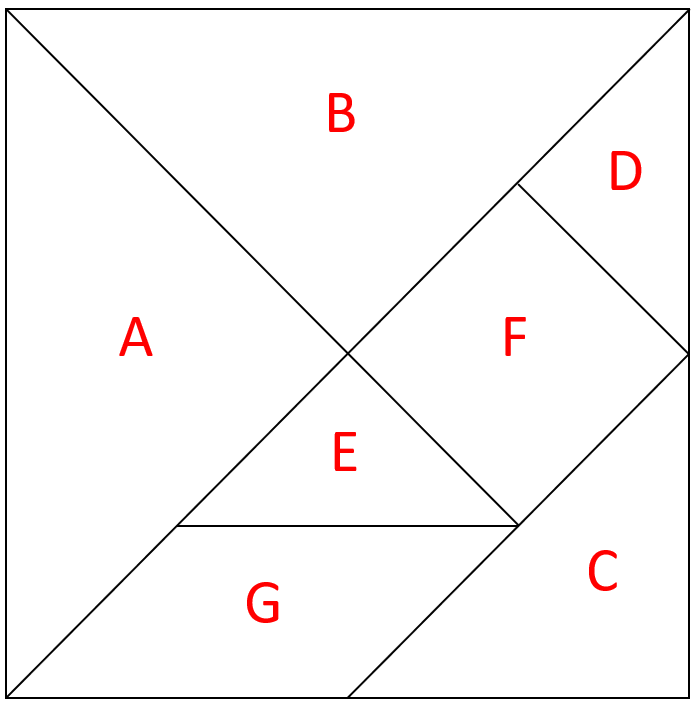
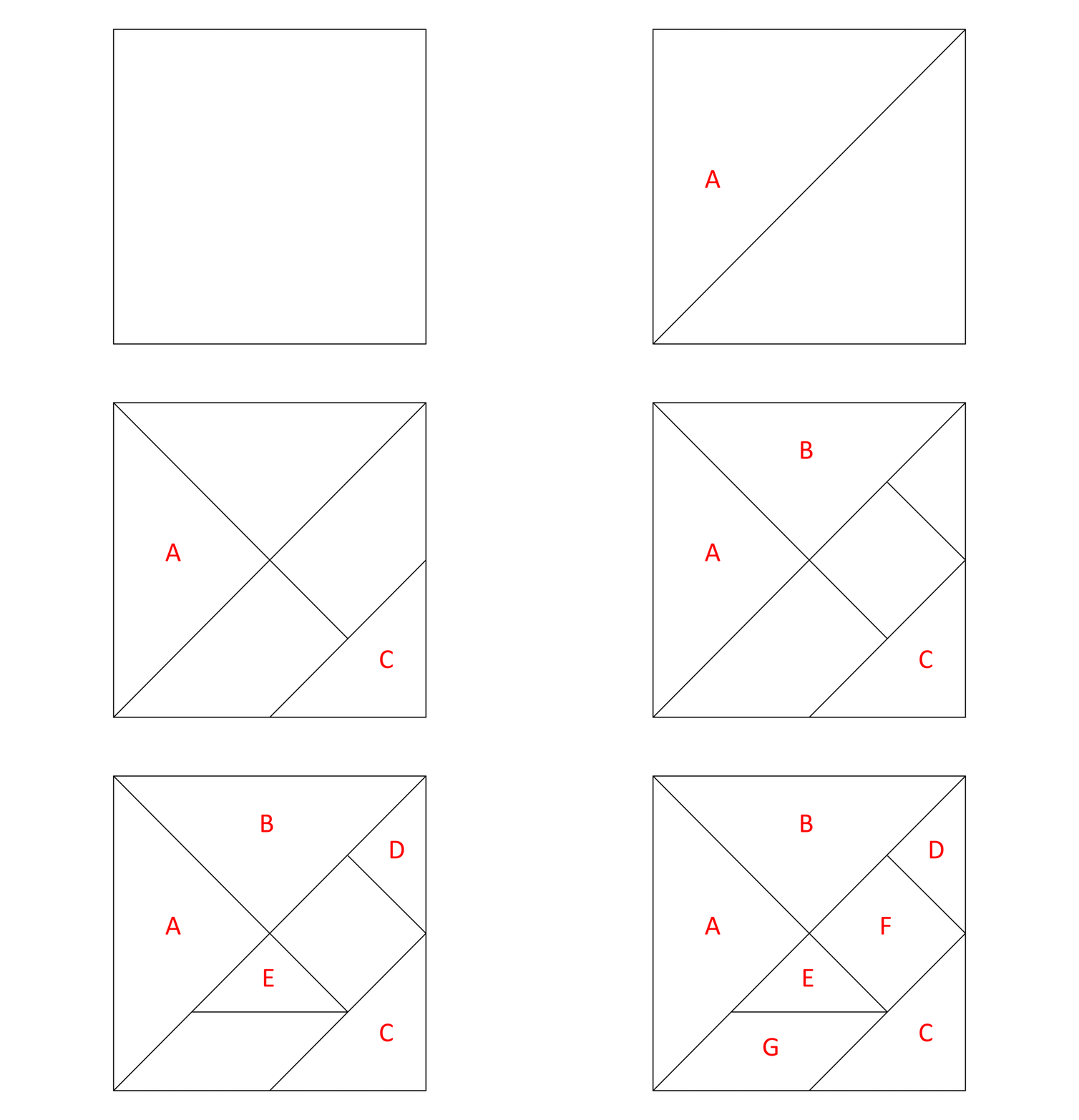
Alternatively, you could print the tangrams from this A4 template or provide step-by-step instructions for children to draw their own tangrams using this slideshow.
Using the pieces which you just created, try to make the following shapes:

Symmetry
Shapes and objects are symmetrical if they can be divided into two equal parts along a straight line. Some shapes and objects have multiples lines of symmetry and shapes and objects which are not symmetrical are described as being asymmetrical.The following video (3:14) provides a good overview of symmetry.
 |
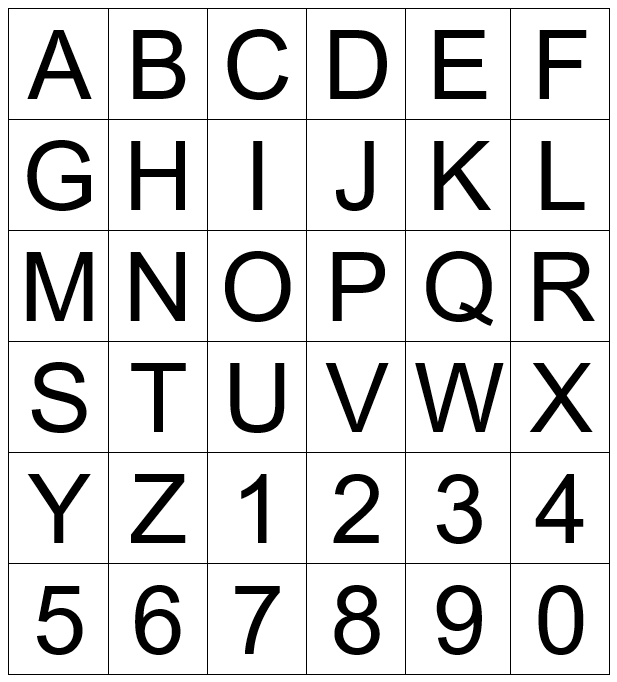
Write out the 26 letters of the alphabet in capitals and also the 10 digits.Identify which characters are symmetrical and draw all lines of symmetry. |
 |
How many characters are not symmetrical?
|
|
Which characters have the most lines of symmetry?
|
Perimeter and area
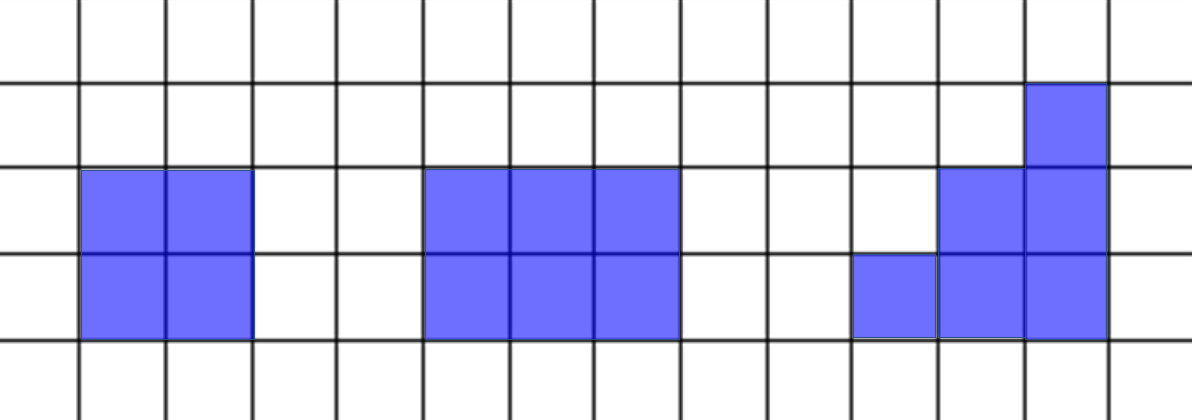
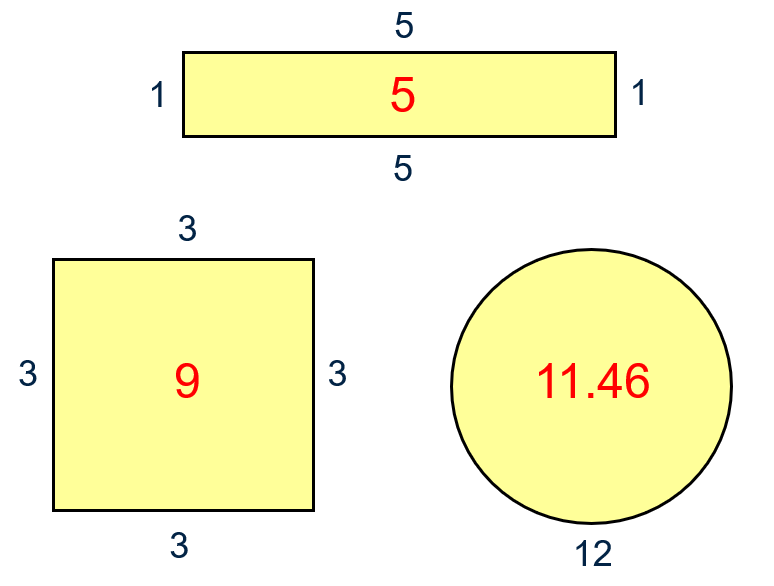
Perimeter is the distance around a shape. Area is the
space inside a shape.
| |
|
Rep-tiles
Repeating tiles or 'Rep-tiles' are are a form of tessellation. Tessellation or tiling is when a surface is covered with repeating shapes. You will learn more about tessellations in SILO 2.4 'Algorithms'. The following video (5:06) explains what rep-tiles are and includes a challenge. You might wish to stop the video at the (2:03) mark to allow students to try this challenge for themselves.
Towards the end of the video a good website is mentioned where students can experiment with polygons called https://mathigon.org/polypad. You will find that this URL no redirects to https://polypad.amplify.com/p. From there you can 'Start a New Polypad'.
Three dimensions
Now that we have looked at two-dimensional shapes, we will turn our attention to three-dimensional objects. Like two-dimensional shapes, three-dimensional objects also have width and height. The third dimension is depth.
Prisms
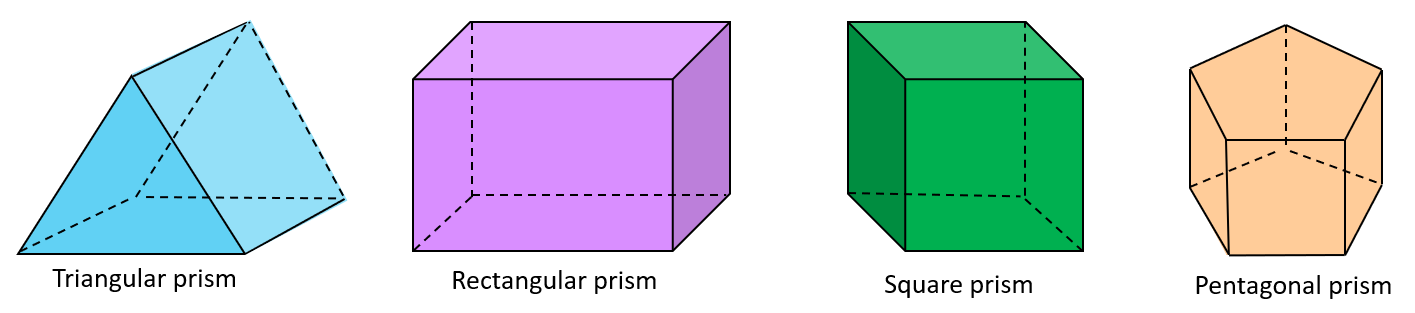
A prism is a three-dimensional object where the two ends are the same shape and size. Prisms are also 'polyhedrons' which are solid objects with flat faces. For this reason a cylinder is not classified as prism. Some examples of prisms are shown below:
Drawing 3D objects
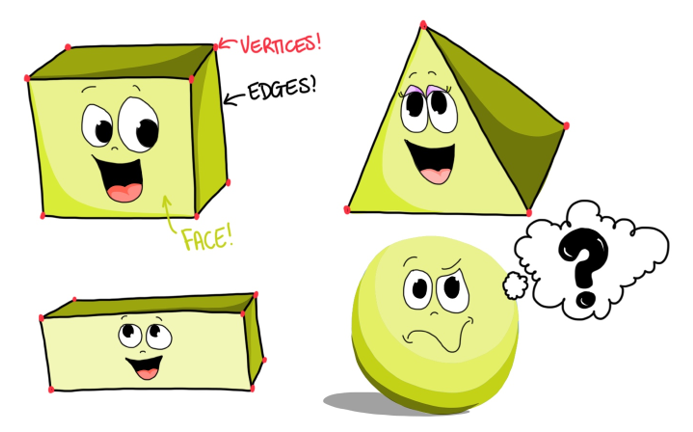
When an object has depth to it, making it able to be filled (such as the cylinder seen in the intro activity), we call this 3 dimensional, or 3D. These objects have different properties: they have a certain number of edges, vertices, and faces that classify them as cubes, prisms, spheres, etc. The diagram below shows where the edges, faces, and vertices of different objects are located. An important note is that edges refer to the area where TWO faces meet, whereas vertices are the locations where THREE OR MORE faces meet.
|
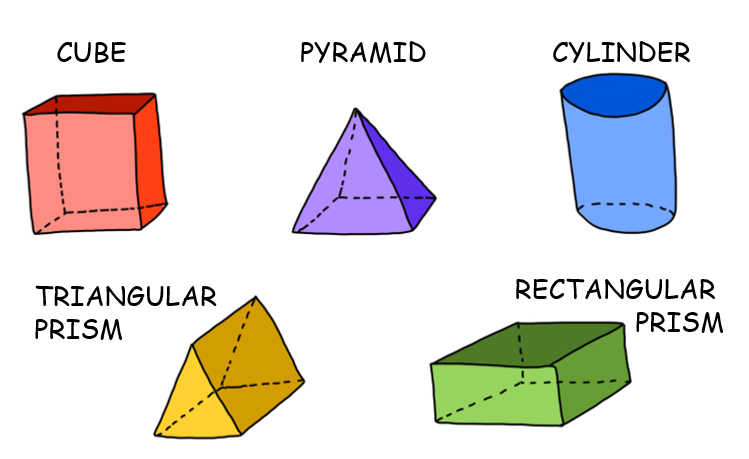
For this activity we are going to be building our own objects.Everyone is going to get a number of different pieces of paper, all coloured differently.You are going to try and fold them to create the following objects: |
|
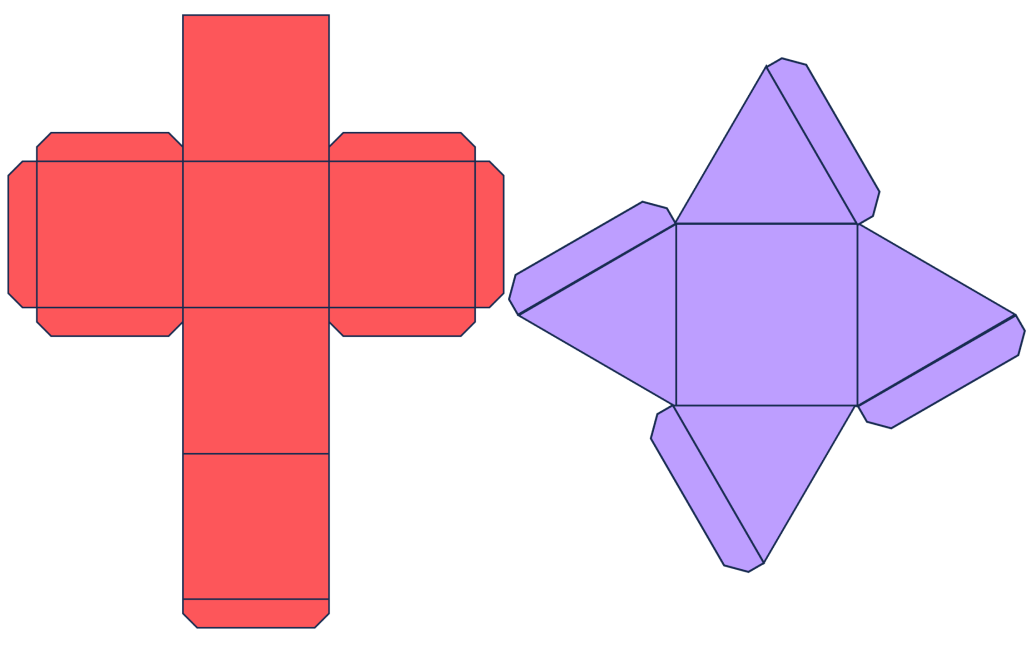
For this activity everyone is going to get a 'net' that can be used to create a cube and a square-based pyramid.Your task is to cut along the solid lines, leaving the inside of the nets as-is until you are finished cutting. Then, you are going to fold along the dotted lines, and tape the tabs on the net to each of the faces to create your object. |

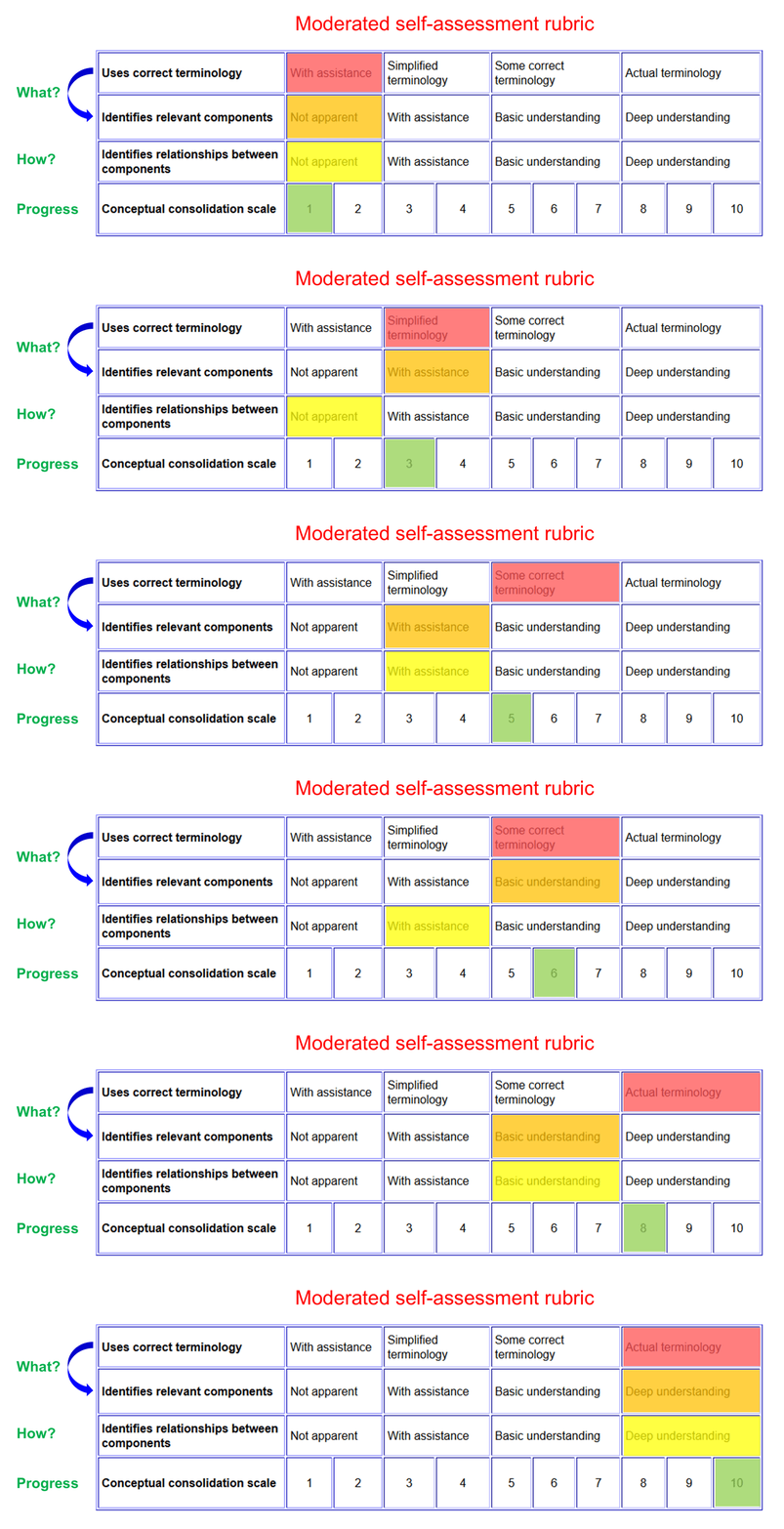
Moderated self-assessment
Discussions with students around the key components of conceptual topics and how they fit together can generate insights into student achievement.
We welcome your feedback and suggestions
The chief investigator for The SILO Project is Associate Professor Brendan Jacobs, Head of Department STEM Education, University of New England. The SILO Project thrives on incremental improvement so constructive feedback is greatly appreciated. Please contact Brendan via email at bjacobs7@une.edu.au to share your thoughts and recommendations.

This work is licensed under a Creative Commons Attribution-NonCommercial-ShareAlike 4.0 International License
Main menu